Markets ended at record closing highs for the second day in a row on institutional buying.

Increasing the duties on auto parts and putting an additional cess on petrol and diesel could drive up costs of vehicles, specially where volumes are low and localisation is not viable.
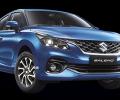
Maruti Suzuki India (MSI) will keep consolidating its existing product line-up, including hatchbacks, while bolstering presence in the fast growing SUV segment to power its way back to 50 per cent market share in the domestic passenger vehicle market, as per a senior company official. The country's largest carmaker, which has seen its market share drop to 43.38 per cent in FY22 from 47.7 per cent in FY21, aims to bring in multiple SUV products with focus on new technologies like hybrid powertrains in order to enhance fuel efficiency, making them comparable or better than diesel-powered models that are currently being sold in the market, especially by its Korean rivals. With no intention of making a comeback in the diesel segment, MSI is also focusing on increasing its play in the CNG segment to bring in additional volumes.
A series of flip-flop on policies and a non-existent charging infrastructure are the biggest challenge in achieving the target of selling 6-7 million hybrid and electric vehicles by 2020.

Search is on for reliable indicators of underlying activity.

Moody's said fiscal measures undertaken by the government -- such as corporate tax rate cuts, bank recapitalisation, infrastructure spending plans, support for the auto sector and others -- do not directly address widespread weakness in consumption demand, which has been the chief driver of the economy. In addition, interest rate cuts by the Reserve Bank of India are not being adequately transmitted to lending rates because of the credit squeeze caused by disruption in the non-bank financial sector, it said.
Indian factory growth likely slowed in Jan, inflation to stay muted.

The company is currently celebrating the first anniversary of its Camry Hybrid in India during which it has sold 541 units
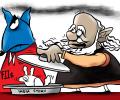
IT, FMCG and manufacturing sectors are less attractive to foreign portfolio investors

'Our task at Mercedes is to have the right setup. It is the customers who make the decision. But, if our approach with the Indian customers is right, we will grow.'

'Kerala isn't as dependent on agriculture like Bihar or Odisha or even other southern states.' 'Economic losses would not be too intense, unlike other states.' 'The floods could, at best, impact India Inc's earnings for a quarter or two.'

Stingray is a sportier version of the WagonR with a more aggressive frontal styling and masculine cues in the rear.

Recently, South Korean Foreign Minister, Chung Eui-yong, dialled his Indian counterpart, S Jaishankar, in New Delhi. His government, he said, "regretted the offence caused to the people of India". A day earlier, India had summoned the South Korean ambassador to express its "strong displeasure" over "an unacceptable social media post".
Maruti is not an online outlier, of course; other heavyweights have rolled out similar services. But as an analyst pointed out, Maruti's all-India roll-out has significant impact given that it accounts for over half of all cars sold, reports, reports Pavan Lall.
Daimler, world's largest manufacturer of commercial vehicles, had reached an understanding in December 2007 for establishment of a joint venture with Munjal family-promoted Hero group, a leading Indian business house with presence in automotive manufacturing, auto parts and services sector.

Through a combination of local manufacture and imported CBU models, the company makes and sells four SUVs, one hatchback, and one sedan.

Honda BR-V will be launched in India this year.

Japanese auto major Suzuki Motor Corporation (SMC) on Wednesday said its long-serving chairman Osamu Suzuki will retire and assume the role of senior advisor subject to shareholders' approval in the ordinary general meeting to be held in June this year.

'We have a customer base of 70,000 in India'.

Honda have discontinued their flagship sedan, the Accord, in the Indian market owing to poor demand.
While there is no solace for those who own petrol cars, let us look at the cheapest diesel cars available in India to help prospective buyers.

MG Motor India is investing Rs 2,500 crore by the end of next year to increase the production capacity at its Halol plant in Gujarat, as it gears up to launch its mid-size SUV Astor, according to a top company official. Despite the worsening semiconductor shortage situation, which is likely to continue for at least another six months, the company expects its sales this year to grow by up to 100 per cent over last year. "We have done an investment of Rs 3,000 crore already, and by the end of next year, we will do another Rs 2,500 crore. "We will reach a total of Rs 5,500 crore," MG Motor India president and managing director Rajeev Chaba told PTI.

At the close, the 50-share NSE Nifty was at 8,611.15, up 19.90 points, or 0.23 per cent, after moving between 8,637.15 and 8,555.20.

'Some of the launches may get deferred due to the semiconductor shortage, which is unlikely to get resolved before the second half of 2022.'
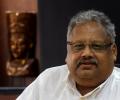
The duo bought additional shares in pharmaceutical companies Lupin and Jubilant Life Sciences, along with Agro Tech Foods and NCC during Q2FY21

Carmakers fear an increase of Rs 35,000-40,000 per vehicle for safety equipments.

The challenges of transition to stricter emission norm BS-VI from BS-IV and compliance to new safety norms thereby making vehicles costlier are lurking around the sector.

'Rahul inspired Indian industry with an ethos, an ethos of being more confident, more independent, more thorough, more competitive, more generous, more public-spirited, and more national and more international all at once,' remembers Naushad Forbes.

The company, which unveiled its compact multi-purpose vehicle Triber in India, is bringing the MPV only in petrol engine option as part of the strategy even as it prepares to introduce electric vehicles in the near future.

Primary steel producers in the domestic market have raised product prices by 2.5 to 3 per cent for December to address margin compression and in anticipation of a demand pick-up.

The figures are encouraging for the auto industry amid apprehension that due to higher cost and lack of fuel availability, cars with stricter emission standards may not be popular in initial stages. Automakers had even cited this confusion as one of the reasons for dwindling car sales in India, reports Arindam Majumder.

While the UN report said that FDI inflows rose 6 per cent in 2018 to $ 42 billion, the government's own data for the entire FY19 period has shown that inbound equity investments declined for the first time in six years in FY19.
The company is engaged in developing diesel engines back in Japan.
Though it will replace Laura, the new model would retain latter's petrol and diesel engines.
Volkswagen group company Skoda Auto India on Thursday launched luxury sedan Superb and said it aimed to break even in 2005 by selling 10,000 cars and launch new models on four product lines till 2008.

The mid-life refreshed Accord comes with stylistic changes along with added features while mechanically it remains unaltered

Bajaj Auto was the top laggard in the Sensex pack, tumbling around 6 per cent, followed by M&M, Reliance Industries (RIL), Tata Steel, Tech Mahindra, SBI, Axis Bank and ICICI Bank. NSE Nifty tumbled 162.60 points or 1.36 per cent to 11,767.75.

The measures government takes next to push economic growth will be the key for automotive sector
 © 2026 Rediff.com - Advertise with us - Disclaimer - Privacy Policy - Sitemap - Feedback - About us - Terms of use - Grievances